
Last Updated: November 4, 2026
Quick Summary
The best tips for festive holiday dinners start with a firm guest count and invitations sent four to six weeks ahead. Then build a menu around one main course that holds its heat, plus make-ahead sides, and write a day-of timeline matched to your oven space.
- Send invitations four to six weeks ahead for a December gathering and ask for RSVPs by a set date.
- Plan the menu around one main course, two or three sides and a simple dessert.
- Choose a roast or braise that holds heat well and sides that can be prepared in advance.
- Build a day-of timeline backward from serving time and assign each dish to an oven, stovetop or slow cooker.
- Ask about dietary restrictions when collecting RSVPs and label every dish with its main allergens.
Table of Contents
- Planning Your Guest List and Sending Invitations Early
- Setting a Realistic Holiday Dinner Menu Ideas Plan
- Preparing Dishes Ahead and Building a Cooking Timeline
- Accommodating Dietary Restrictions and Keeping Food Safe
- Creating Festive Holiday Table Settings Guests Will Notice
- Setting Up Your Home, Dining Space and Small-Space Layout
- Christmas Eve Hosting Ideas for a Relaxed Evening
- Keeping Guests Comfortable and Knowing How to End a Dinner Party
- Your Next Step: Planning Your Festive Dinner This Season
- Frequently Asked Questions
Planning Your Guest List and Sending Invitations Early
Hosting festive holiday dinners starts long before the first guest rings the doorbell. Most hosts who feel calm on the night made their key decisions weeks earlier, starting with who is coming and how many chairs, plates and serving spoons they need.
Decide on a headcount first. A firm number tells you how big a table to set, how much food to buy and whether you need to borrow extra seating. Many hosts find it easier to write the list on paper and then count it twice.
Send invitations early, ideally four to six weeks ahead for a December gathering, since holiday calendars fill quickly. Ask for RSVPs by a specific date, and follow up with a short text to anyone who has not replied. A simple reminder keeps your numbers accurate, which matters more than any single decoration when you are planning festive holiday dinners.
Watch out: Guests who RSVP "maybe" often never confirm. Give them a deadline and plan the menu around the number you can count on.
Setting a Realistic Holiday Dinner Menu Ideas Plan
A workable menu is built around one main course, two or three side dishes and a simple dessert. Trying to cook six entrees usually means a stressed host and a cold table, so keep the plan focused.
Choose a main course that tolerates waiting. Roasts, braises and baked pasta hold their heat and flavor better than delicate pan-seared dishes. Pair it with sides that can be made partly in advance, such as roasted vegetables, a green salad dressed at the last minute and a starch that reheats well.
Add a few easy appetizers that guests can eat while you finish the main dish. A cheese board, a bowl of nuts and a tray of raw vegetables with dip cover the wait without extra cooking. For dessert, a pie or a sheet cake can be finished the day before.
Write the menu down, then cut one item. Most hosts find they can drop a dish without anyone noticing.
Preparing Dishes Ahead and Building a Cooking Timeline
Make-ahead cooking is what separates a relaxed host from a frazzled one. Chop vegetables, assemble casseroles, bake pies and make sauces in the two or three days before the dinner, and store each component in clearly labeled containers. Label with the dish name and the date, not just "sauce," so you are not guessing on the night.
The real work is the day-of schedule, and the constraint most hosts underestimate is oven space. A single oven can usually hold one large roast plus one medium casserole at the same temperature, but not a third pan without crowding the heat. Build your timeline backward from the serving time and assign every dish to an appliance: oven, stovetop, slow cooker, or countertop.
A workable pattern for a 6 p.m. dinner with a 12-pound turkey or a comparable roast:
| Time | Task | Appliance |
|---|---|---|
| 3 days before | Shop from a written list; bake dessert; make stock or gravy base | Oven, then fridge |
| 2 days before | Chop vegetables; assemble casseroles; toast bread for stuffing | Counter, fridge |
| 1 day before | Set the table; chill drinks; prep appetizers; dry-brine the main course | Fridge |
| 9:00 a.m. | Take the roast out to temper; start slow-cooker side | Counter, slow cooker |
| 12:30 p.m. | Put the main course in the oven at 325°F | Oven |
| 2:30 p.m. | Add the casserole to the oven if space allows; otherwise hold it for the stovetop | Oven |
| 3:30 p.m. | Roast comes out to rest 20-30 minutes; raise oven to 375°F for rolls | Oven |
| 4:00 p.m. | Reheat sides on the stovetop; warm rolls in the oven | Stovetop, oven |
| 5:30 p.m. | Set out appetizers; pour drinks; carve | Counter |
| 6:00 p.m. | Serve | , |
Plan around your oven, since a large roast, a casserole and a pan of rolls can compete for the same space. A common pattern is to cook the main course first, let it rest under foil while the oven comes up to temperature for bread and a gratin, and keep the stovetop free for sauces and reheating. If you have a second oven or a countertop oven, assign it to sides so the main oven stays dedicated to the roast.
Watch out: opening the oven door to check on a roast drops the temperature and can add 10-15 minutes to the cook time. Use the oven light and a probe thermometer instead, and pull the roast when it reaches 5°F below your target so carryover cooking finishes the job.
Accommodating Dietary Restrictions and Keeping Food Safe
Ask about allergies and dietary needs when you collect RSVPs, not at the table. A simple question on the invitation, such as "Any dietary restrictions we should know about?", gives you time to adjust the menu. Follow up with a direct question about severity: a guest who avoids gluten by choice and a guest with celiac disease need different levels of care, and a nut allergy can range from preference to anaphylaxis.
The inclusive-menu approach most hosts miss is to design dishes that are naturally free of common allergens rather than making special plates at the last minute. A roasted vegetable side, a rice or potato starch, and a simple protein with herbs and citrus can satisfy gluten-free, dairy-free, and vegetarian guests at once. Build one main and one side that fit the most restrictive need at the table, then add the richer dishes around them.
Label every dish clearly, including the main ingredients, so guests with allergies can serve themselves safely. A small card in front of each dish listing the top allergens (milk, eggs, fish, shellfish, tree nuts, peanuts, wheat, soy, sesame) takes two minutes and removes the guesswork. Keep nut-containing foods separate from the rest of the spread when anyone at the table has a nut allergy, and use separate serving utensils for those dishes.
Watch out: cross-contact is the most common way an allergy-safe dish becomes unsafe. Wash hands, use clean cutting boards and knives, and avoid reusing a utensil that touched a nut dish. If a guest has a severe allergy, ask them directly what they need and consider keeping the allergen off the menu entirely.
Food safety matters as much as flavor. A slow cooker or chafing dish can keep food warm, and a bowl of ice under cold dishes helps keep them safe during a long evening.
Christmas Pine Garland - Front Door Decoration →
Creating Festive Holiday Table Settings Guests Will Notice
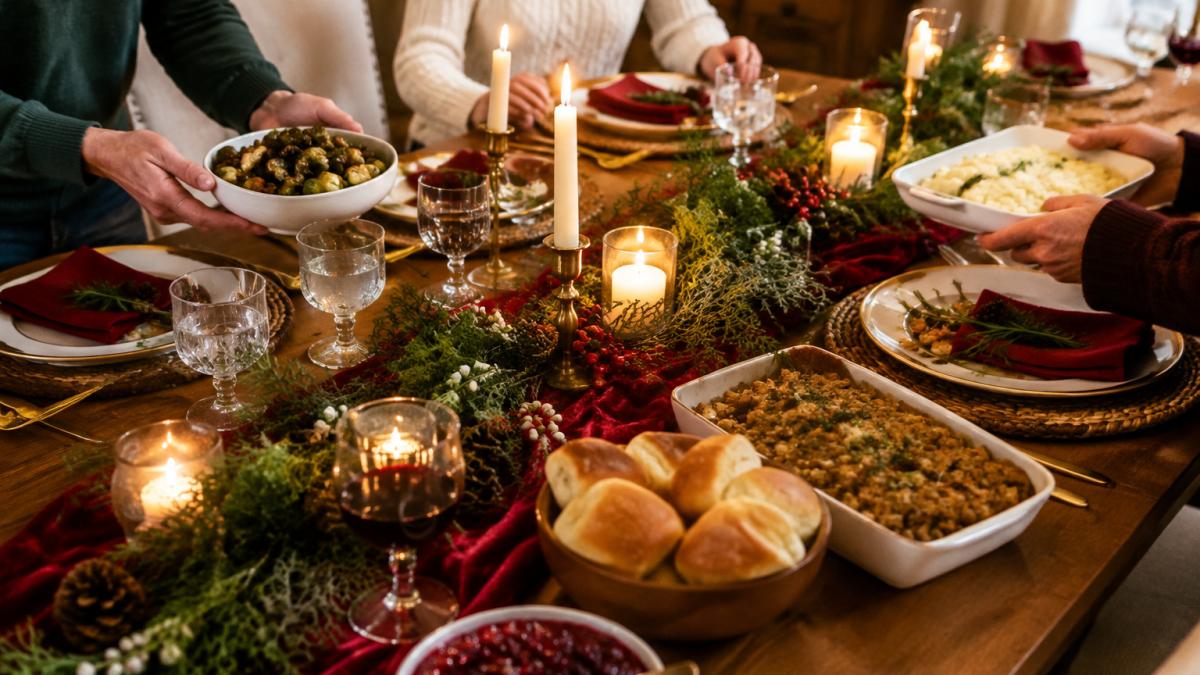
Guests remember how a table looks as soon as they sit down. A pine garland runner, a few red velvet accents and mismatched but coordinated plates can make an ordinary dinner feel special without much expense.
Start with the base layer: a clean tablecloth or runner, then plates, napkins and glassware. Add greenery and candles at varied heights so guests can see each other across the table. Keep centerpieces low enough that conversation is not blocked.
For a finishing touch, a Oversized Velvet Christmas Tree Bow adds bold festive color to a mantel or sideboard near the dining area, and a Christmas Pine Garland - Front Door Decoration can carry the greenery theme from the entrance through to the table.

Setting Up Your Home, Dining Space and Small-Space Layout
Small apartments make hosting harder, but they do not rule it out. To dress up the entrance, a pine garland for the front door brings greenery to the first thing guests see. Plan the flow of traffic first: guests need a clear path to the coats, the drinks and the bathroom, and the dining area should be reachable without squeezing past furniture.
If your dining table is small, use a console table or sideboard for serving dishes and drinks, which keeps the main table free for plates. Fold-away chairs and a second temporary surface, such as a board across two chairs, can seat extra guests. Clear closet space ahead of time so coats and bags have somewhere to go.
Seasonal decor works well in compact spaces when it is limited to a few focused areas. A garland along a doorway or mantel, a single statement bow and a throw blanket on the sofa give a festive feel without crowding the room. For more options that suit compact rooms, see seasonal decor for small apartments. The Christmas Sherpa Fleece Blanket - Cozy Holiday Throw is one simple way to add warmth to a small living area after dinner.

Christmas Eve Hosting Ideas for a Relaxed Evening
Christmas Eve dinners often work best when the evening has a simple structure. Serve a light meal with a few make-ahead dishes, then move guests to a comfortable room for conversation or a gift exchange.
A cozy activity keeps the mood relaxed after the meal. A DIY ornament kit gives children and adults something to do together, and a bit of lighting adds atmosphere. The Smart Animated Christmas Tree Lights - App-Controlled LED Display can be set up before guests arrive so the tree is lit when they walk in.

Avoid planning too many activities. A single game, a short movie or a simple craft is enough for most groups.
Keeping Guests Comfortable and Knowing How to End a Dinner Party
Comfort is what guests remember most. Keep water on the table, offer a place to put down coats and bags, and check that the room temperature is right before the first guest arrives.
Ending a dinner well takes as much planning as starting one. Clear dishes between courses so the table never looks cluttered, and set out dessert and coffee with enough time for guests to relax. When the meal is over, thank guests for coming and let them know the evening is winding down. Many hosts find that a simple "thank you for coming" at the door is what people remember.
Cleanup goes faster when you have a plan. Load the dishwasher as you go, soak the roasting pan right away and leave the bigger tasks for the next morning.
Your Next Step: Planning Your Festive Dinner This Season
Start with the guest list, set a menu you can prepare in stages and build a timeline you can follow on the day. Keep the table and the space simple, and leave room for the unexpected.
Every dinner has a few surprises, but a plan makes them easier to handle. Once the season ends, advice on storing seasonal decor helps keep everything in good shape for next year. Choose one or two decor pieces, such as the Christmas Pillowcase - Santa & Christmas Tree Cushion Cover for a living-room sofa, and browse the full Holiday Home collection to find pieces that suit your space and your style.
Frequently Asked Questions
What are some tips for hosting a Christmas dinner party?
Start by fixing your headcount and sending invitations several weeks ahead so guests can plan. Choose a menu with one main course, two or three make-ahead sides and a simple dessert, so you are not cooking everything on the day. Write a cooking timeline working backward from serving time, and set up drinks and a clear spot for coats before guests arrive. Keep a short list of backup options for delays or unexpected guests, and plan a few minutes of rest for yourself before the first doorbell rings.
How far ahead should I plan a holiday dinner?
Plan the guest list and invitations about four to six weeks before the dinner, and finalize the menu and shopping list about two weeks out. Buy non-perishable items and table decor early, then prepare make-ahead dishes two to three days before the event. Confirm RSVPs and dietary needs at least one week ahead so you can adjust portions and the menu without last-minute stress.
What should I make when hosting Christmas dinner?
A good holiday dinner menu includes one main course, such as roasted turkey, ham or a vegetarian centerpiece, plus two or three side dishes and one dessert. Choose dishes that can be prepared ahead, like casseroles, salads and pies, to keep the day manageable. Include at least one option for guests with dietary restrictions, and estimate about one-third to one-half pound of main-course protein per adult to avoid both shortages and excess food waste.
How can I set a festive holiday dinner table?
Start with a neutral base such as a white or cream tablecloth or runner, then add festive accents like a pine garland runner, red velvet ribbon or bow, and candles at varying heights. Set each place with plates, flatware and a glass, and leave room between settings so guests can move comfortably. Label serving dishes and keep the table uncluttered so guests can easily reach food and drinks.
How do I keep guests comfortable during a holiday dinner?
Make sure there is enough seating, a comfortable temperature, and a clear place to set down coats and bags. Offer water and a non-alcoholic drink alongside wine or other options, and keep appetizers available while the main course finishes. Ask about dietary needs in advance and label dishes so guests can choose safely. A cozy throw blanket on a chair or sofa is an easy touch for guests who feel chilly between courses.
How do you end a dinner party gracefully?
Signal the end of the evening by bringing out dessert and coffee, then start clearing plates once most guests have finished. Thank guests for coming, and offer leftovers in labeled containers if appropriate. Plan a clear end time on the invitation so guests know what to expect, and let the most senior or closest guests lead the departure. A brief, warm thank-you as people leave closes the evening well.
